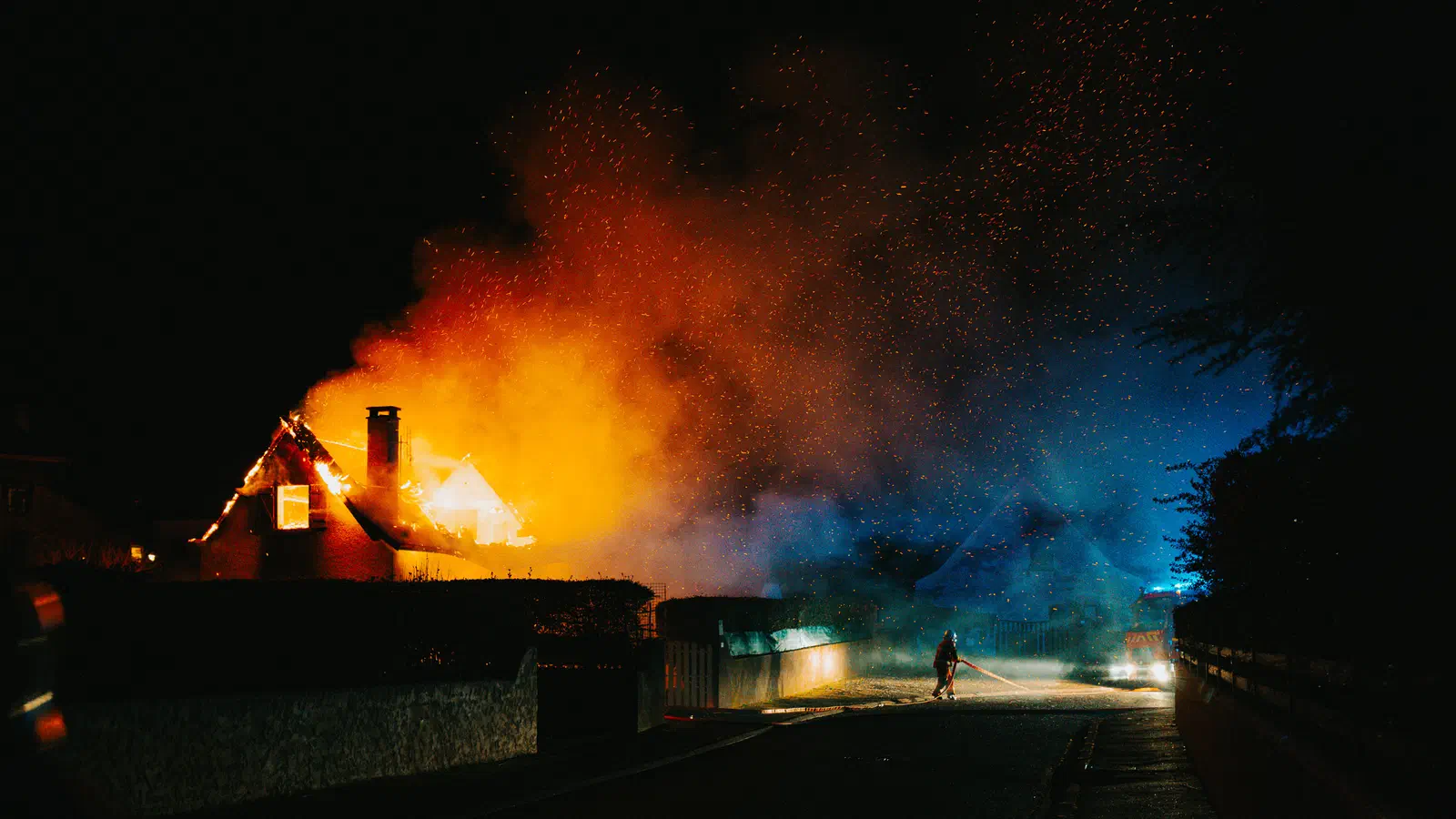
The photographer's place in the world
Reportage, even when it disturbs?
I like firefighters. And I want to be able to show the reality of their work.
Last night, someone said to me:
“The man has just lost his house and you are taking pictures.”
Yes, I take pictures.
But before that, I was the first person to call the emergency services. I ran barefoot, through wet grass and then on cold asphalt, in the middle of the night, wearing only a down jacket and sweatpants pulled on in a hurry, to see if there were people to rescue.
I met the man who had just lost his house. I introduced myself. I helped him move away from the fire. I asked him if anyone was still inside, if he had animals. At that moment, the very idea of a positive answer made me freeze; it would have been impossible for me to play the hero, like in a film, or to attempt anything. Faced with fire, you quickly understand how impressive it is. I stayed with him while, around us, other neighbors were already filming the scene with their phones.
The photographs came only afterwards. Thirty minutes later.
I went home, still barefoot, to get my gear, then I came back.
Yes, I photographed the action. Because you are essential. Because even if nobody wants to see their house burn, a fire remains a rare event. And documenting what is rare is also telling reality.
I want to keep a trace of it. I want people to understand the risks you take. I want people to see what it concretely means to intervene in front of fire.
I was asked not to photograph “the guys.” I do not know exactly why, but I respected it. No face will be shown.
And yet I find that a shame. This text is not an attack. It is a question.
What is the photographer’s place today when documenting reality, especially when it disturbs?
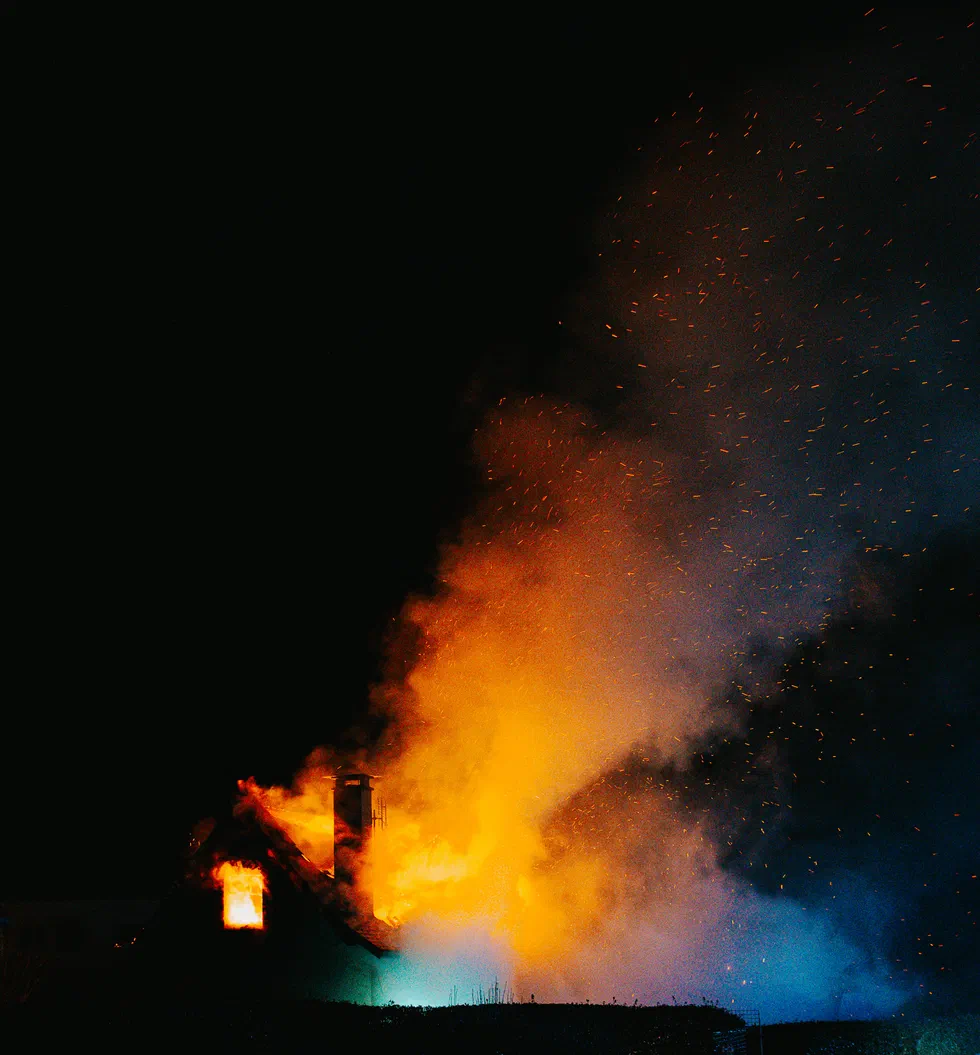
So, what is the photographer’s place?
That question runs through the entire history of reportage. It is asked during every war. Every natural disaster. Every image judged too harsh, too close, too disturbing.
It has been asked of war photographers, accused in turn of voyeurism, indecency or coldness. It has been asked of those who document earthquakes, floods, fires, famines. Always the same question: did that photograph really need to be taken?
And yet, without these images, what would remain? Without them, many conflicts would have stayed invisible. Many disasters would have existed only for those who lived through them. Many professions exposed to danger would have remained abstract, smoothed out, turned into symbols or slogans.
Reportage has never been meant to comfort. Its role is to show, to bear witness, sometimes to unsettle. Not to shock for free, but to make real what, without images, would slide too quickly into oblivion.
Photographing a war does not mean endorsing it. Photographing a disaster does not mean rejoicing in tragedy. Photographing a fire does not mean ignoring the pain of the person who loses everything.
It means refusing to look away.
Of course, limits exist. Respect, timing, dignity. There are images you do not make. Moments when the camera stays down.
But total silence has never protected anyone.
If we accept without blinking staged images, calendars, communication campaigns, clean and controlled representations of danger, then why refuse images of reality?
Perhaps because reportage reminds us of something uncomfortable: everything can tip over quickly, fire, war or disaster are never very far away, and those who intervene take very real risks, far from polished images.
So the photographer’s place today may be exactly there: in the wrong place, at the wrong time, where nobody wants to look but where it is nevertheless necessary to bear witness.
If nobody looks, then nothing really exists.
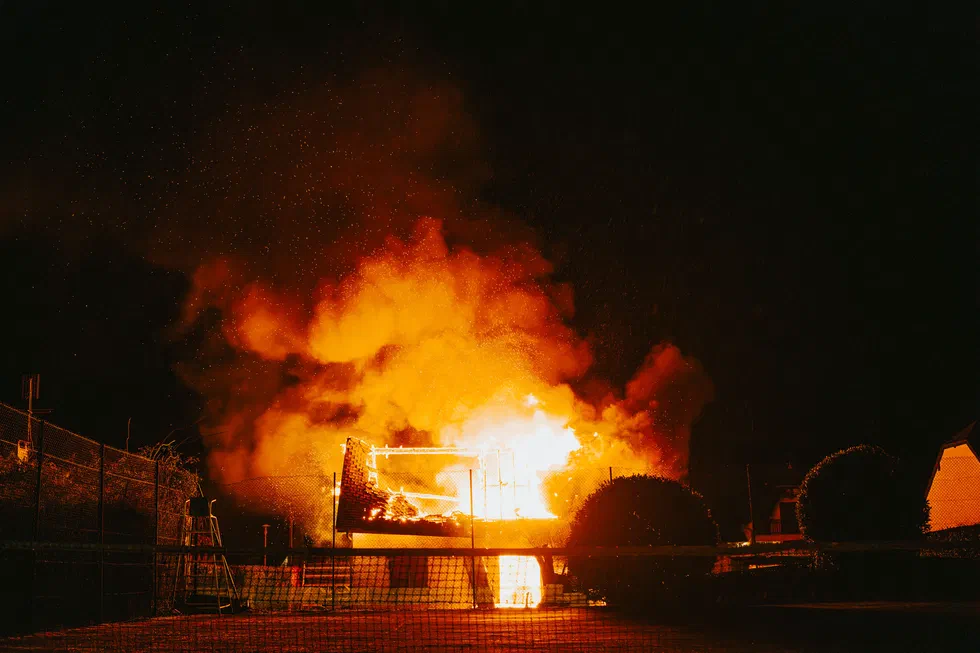
I did not think a neighborhood fire would make me reflect so much on this question: why photography? You could think I am making too much of a local, almost ordinary event. But the mountain of thoughts triggered by that night brought me back to all of this. So no, it is not a war, it is not an international event. But it is real. And that is precisely why it deserves to be told.
Thank you to the firefighters for their intervention last night, thank you to the gendarmerie, thank you to the neighbors.
French National Federation of Firefighters
https://www.pompiers.fr/prevention-des-risques/
(Prevention, awareness, role of firefighters)
Mathieu.
If this article speaks to you, you can see my photo reports, discover Pyrenees photo prints, or contact me about your photo project.