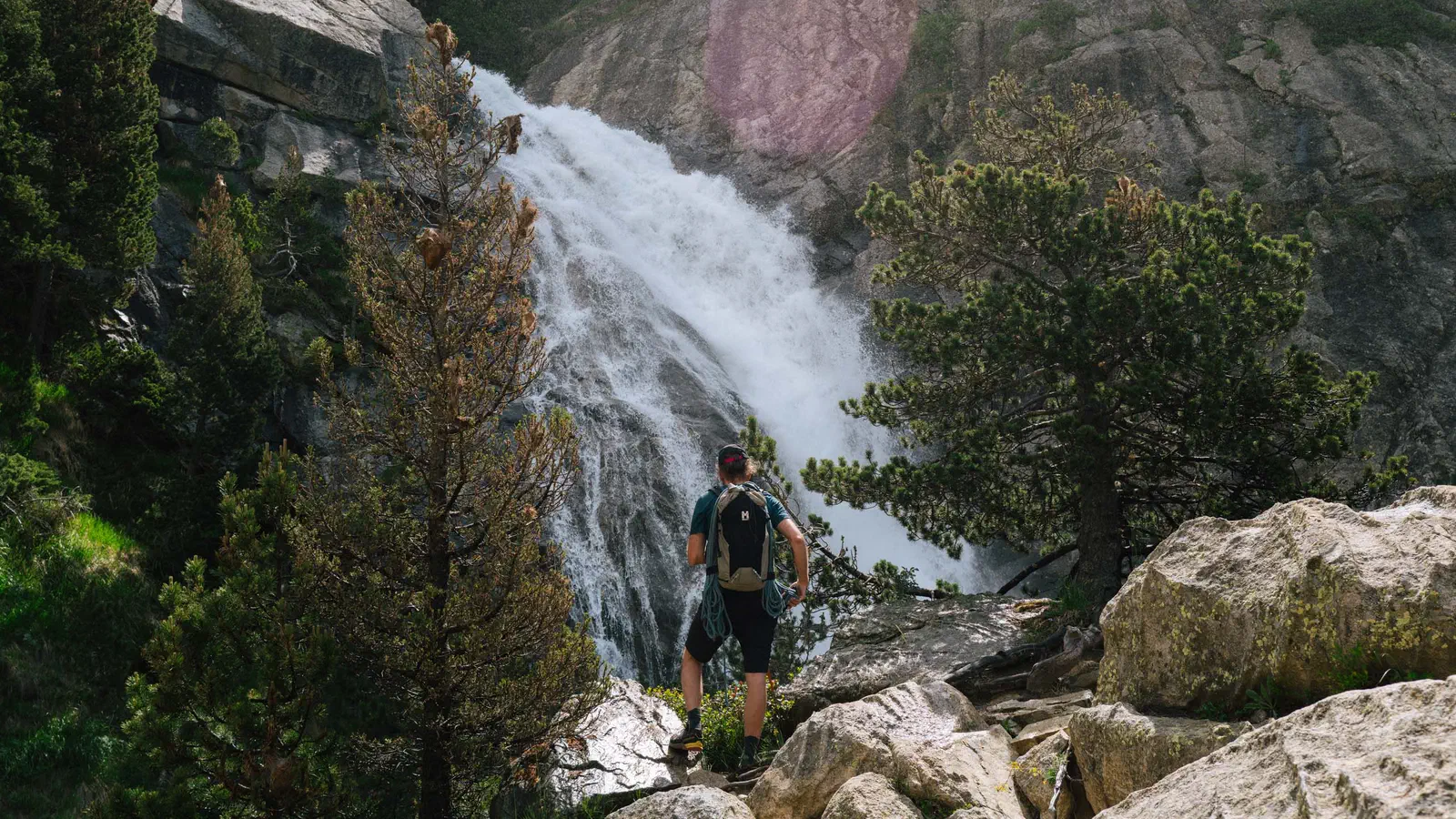
My first multi-pitch route: Espolon del Pino in Panticosa
I have just experienced my first multi-pitch climb. There was a time when I could never have imagined myself climbing a big route. To be honest, I did not even want to climb on cliffs: I was bouldering, and that was enough for me. But after hearing friends talk to me about multi-pitch routes, after tasting a little bit of cliff climbing… the desire to try something new eventually started to tickle me. And one day, I said “yes” to the famous question: “Do you want to do a multi-pitch route with me?”
But first, what is a multi-pitch route, Mathieu?
A multi-pitch route is simply a climbing route you climb in several pitches. You climb one section, you arrive at a belay station, a solid anchor point on the wall, you secure yourself, and then you leave for the next pitch. And so on until the summit or the end of the route.
Unlike single-pitch cliff routes, here you are really in vertical terrain, often in the mountains or on large cliffs. You need to manage belaying over several pitches, the belay stations, sometimes route finding, and often… fatigue. Some multi-pitch routes are fully equipped, with anchor points already in place. Others require you to place your own protection, such as nuts or friends.
Heading to the Spanish Pyrenees
Yannick, who I mentioned in my article about snow levels, suggested doing my first multi-pitch route with him. Yannick is truly a good guy: funny, experienced, ready to teach you lots of things, but above all someone who likes to enjoy a nice outing and see beautiful things.
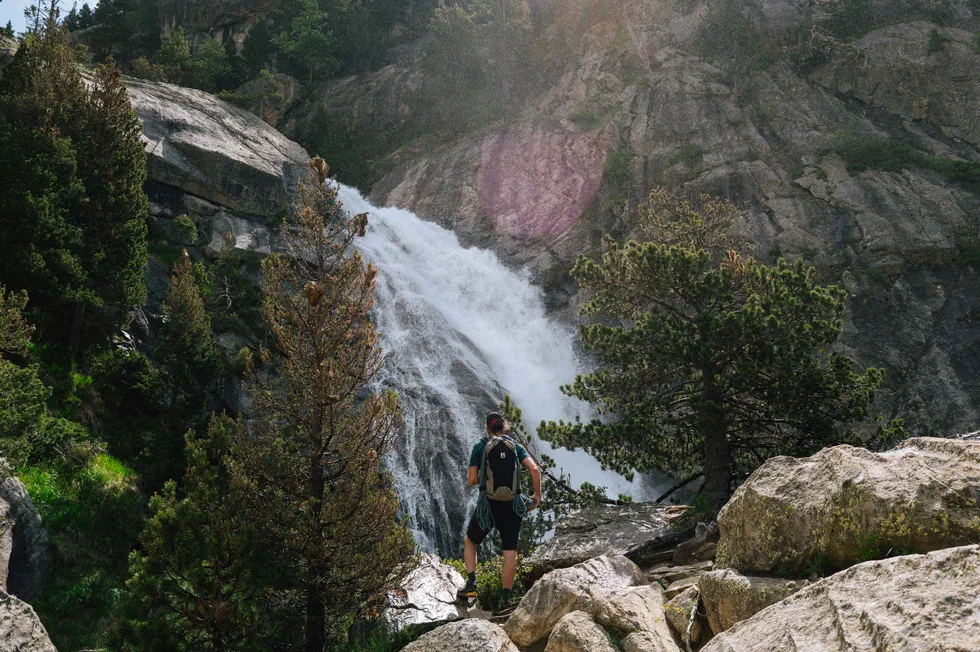
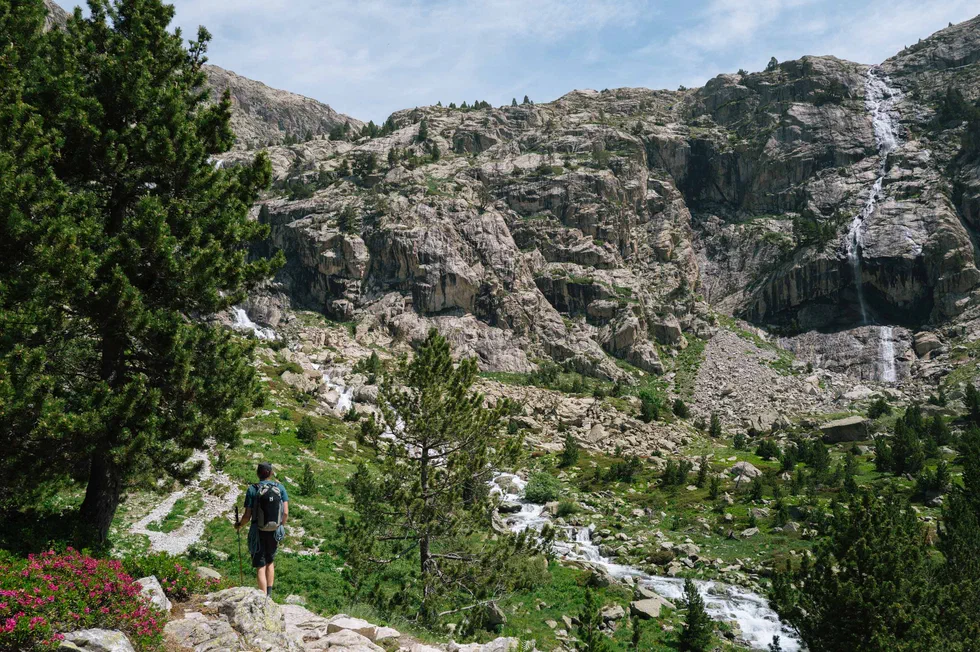
He suggested a 250-meter route: Espolon del Pino, starting from Panticosa, heading toward the Bachimana waterfall. A beautiful line of seven pitches, perfect for an initiation without pressure. Here are a few photographs from the approach walk to set the mood:
The approach and the river crossing
Here we are, on our way, backpacks on, heading to the foot of the route.
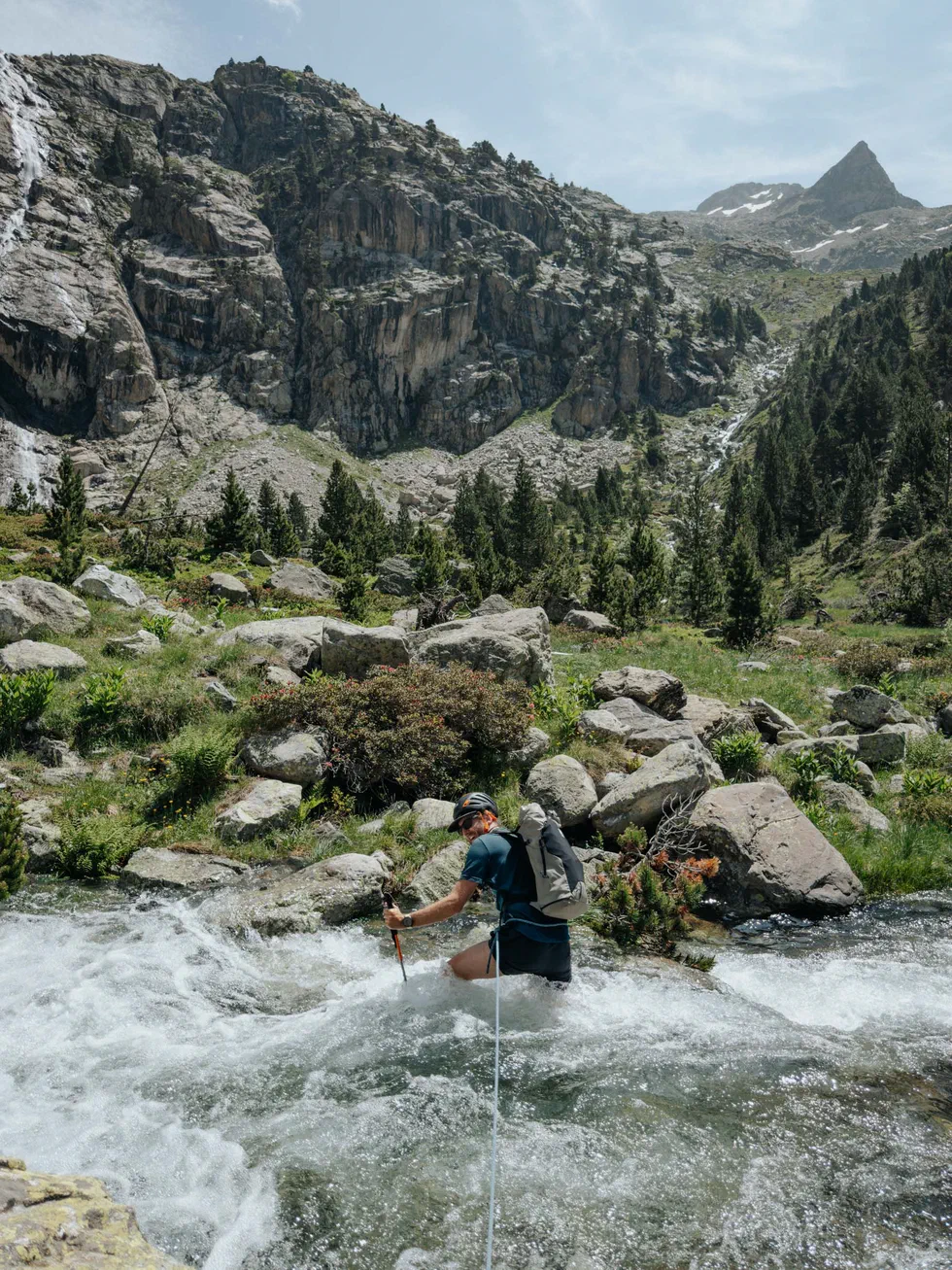
A memorable little passage: crossing a very cold river… We roped up to secure the crossing, with icy water almost up to the waist. Enough to wake you up instantly.
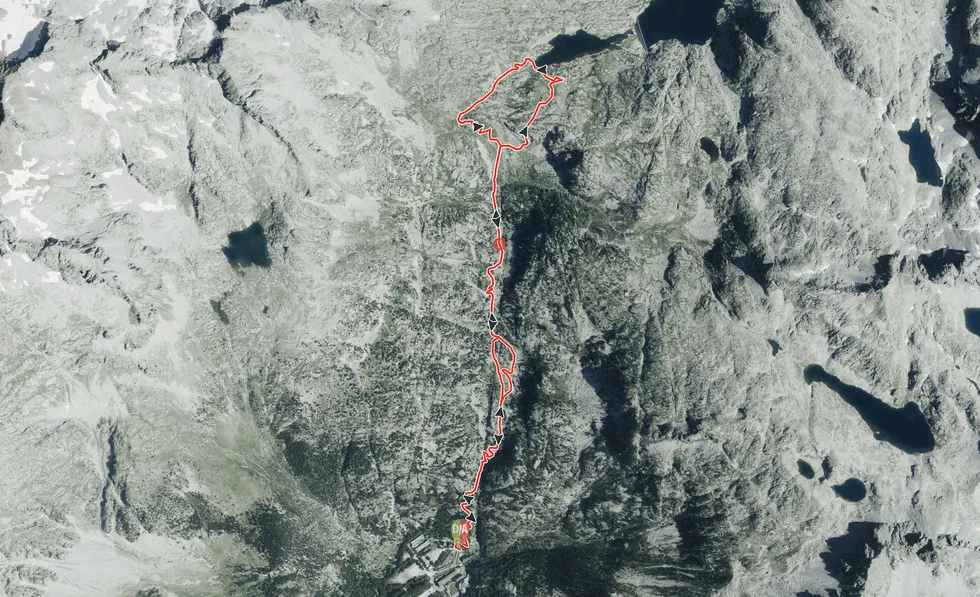
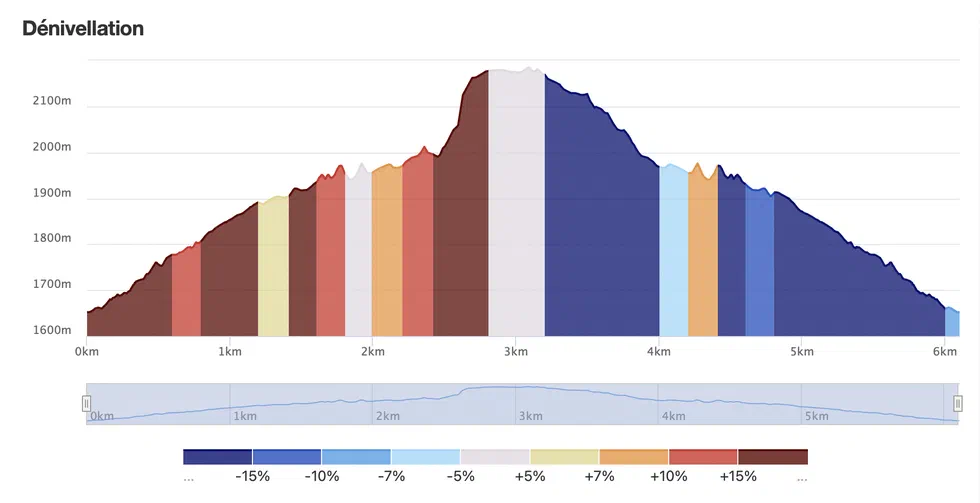
Here is the satellite view of the route and the elevation gain graph. Between the 2nd and 3rd kilometer: that is where the wall we climbed is located.
Time to climb
We arrived at the foot of the wall. Yannick explained several things about how the route would unfold. The words we would exchange, the fact that we would use walkie-talkies, practical in the mountains with wind and the noise of the waterfall, and how to build a belay station.
Honestly, I was never really afraid. You are so focused on the climbing and the rope handling that you do not think too much about the void. Above all, I discovered something I had never experienced indoors: slab without holds. At times, you do not even need to look for holds. You place your hands flat and press; the grip of the stone does the work. That was a revelation for me.
Another moment I loved: a small overhanging passage, nothing very hard, but in the mountains it feels really good.
The route grades, for those who like numbers:
- L1: 3c (40 m to warm up)
- L2: 4c (35 m)
- L3: 5a (35 m)
- L4: 4a (30 m)
- L5: 4b (35 m)
- A little walking, about 20-25 m
- L6: 5b (25 m)
- L7: 3b (35 m)
A physically relaxed climb, perfect for discovering multi-pitch without burning out. The view is incredible throughout the ascent.
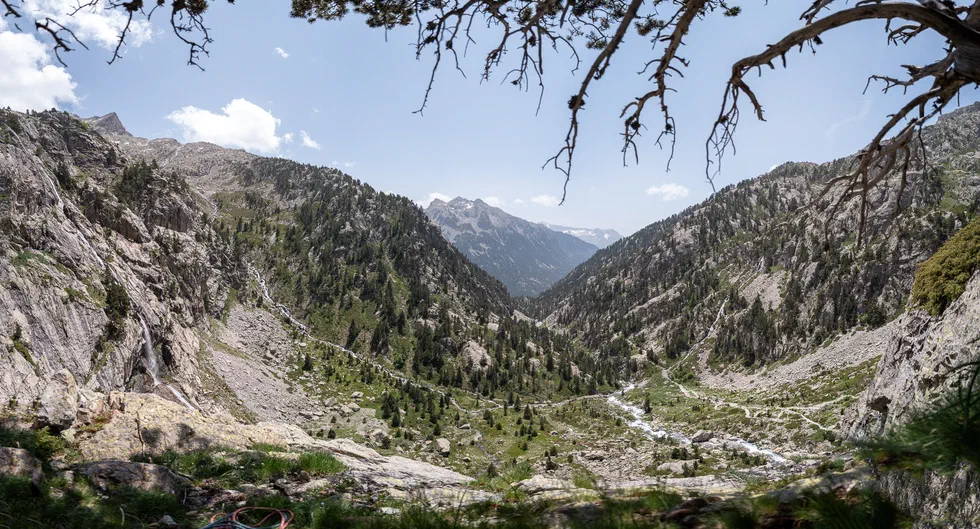
Pretty nice view while climbing, right?
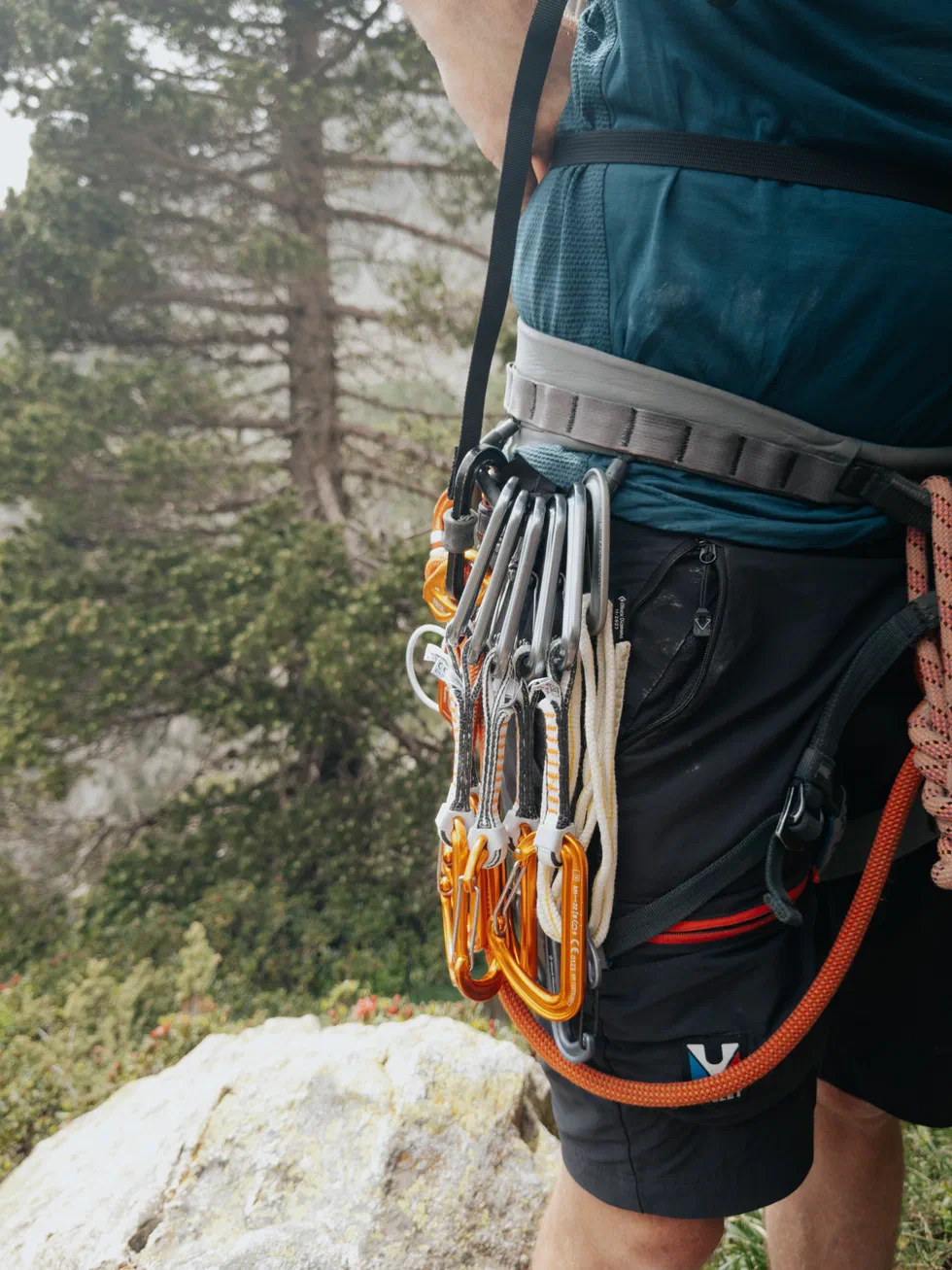
Gear used
- Climbing shoes: Simond from Decathlon
- Harness: Blue Ice
- Helmet: Mammut
- Quickdraws: my 12 new Camp Photon Wire quickdraws
- Lanyard + carabiners: Petzl
- Walkie-talkies
We climbed with twin ropes, which is ideal for this kind of route.
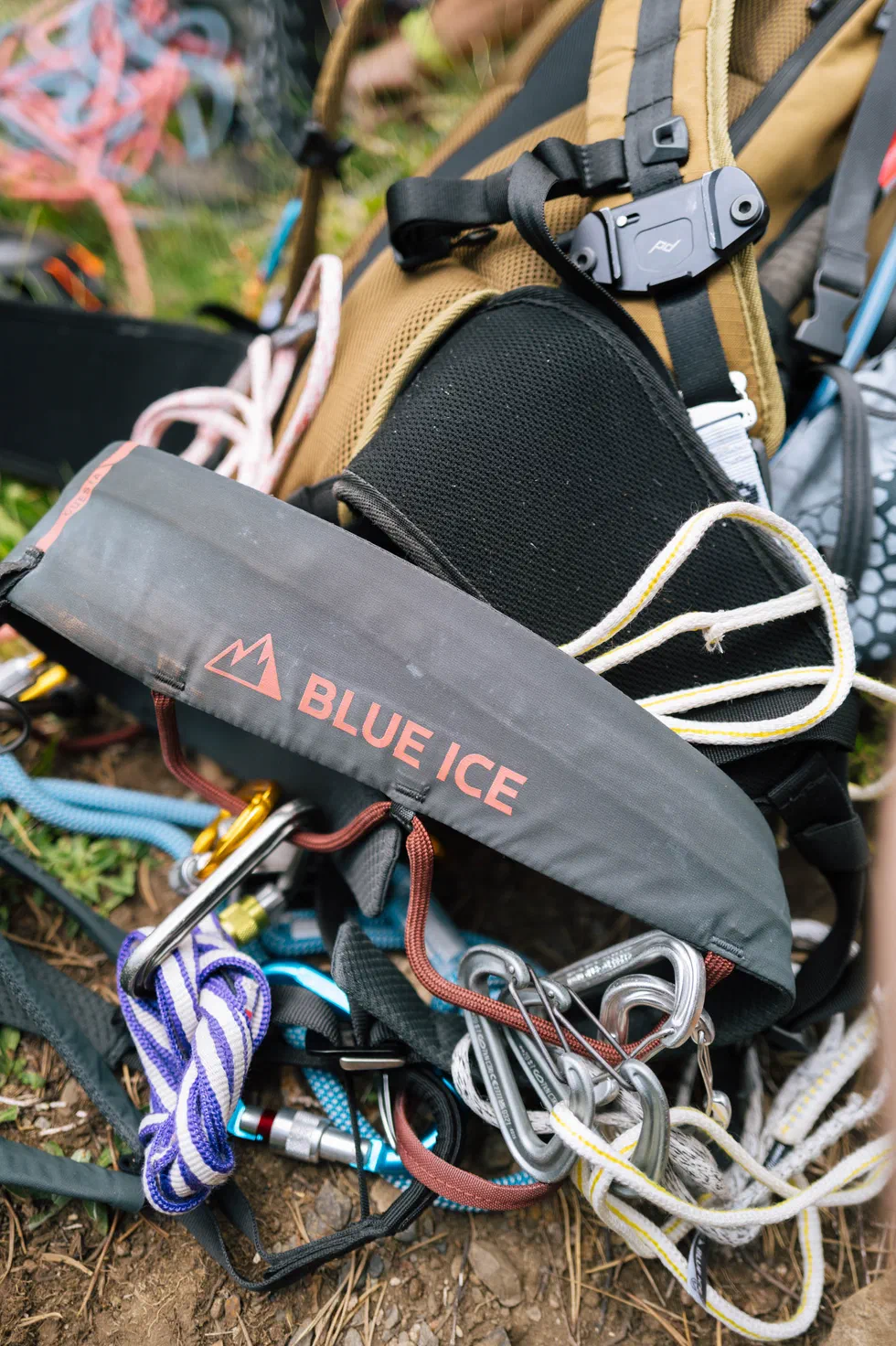
Harness: Blue Ice
The descent and after
Once at the top, we paused for a moment at the refuge to enjoy the view, drink something, take out jackets because the wind does not forgive, then we headed down the descent trail to find the car again.
I ended that day full of satisfaction, with only one idea in mind: I want to do a harder one, just to enjoy the climbing itself even more.
It gave me a taste for multi-pitch climbing, the desire to keep learning, progressing… and spending more time suspended above the void.
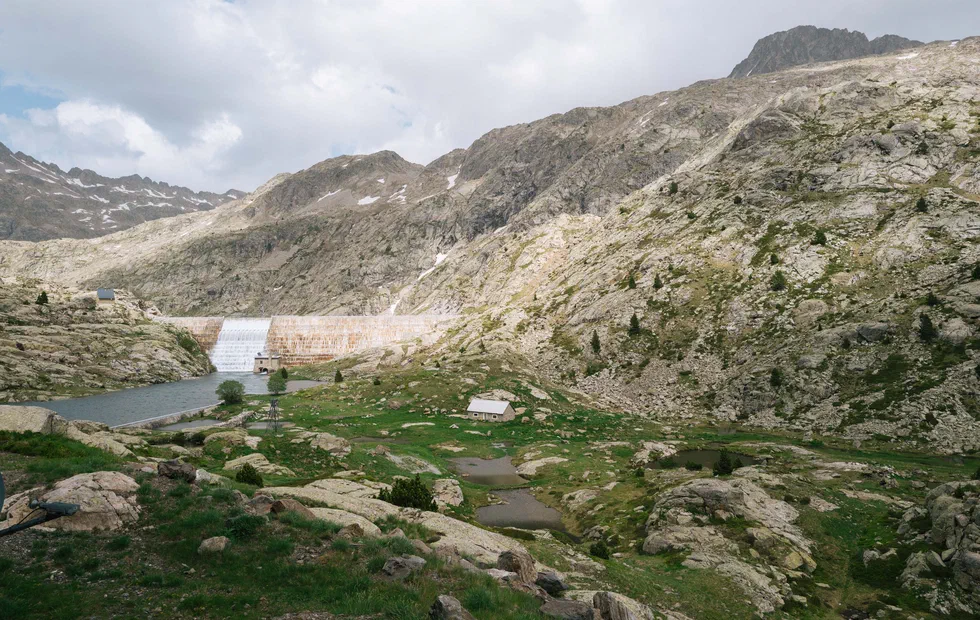
View from the refuge
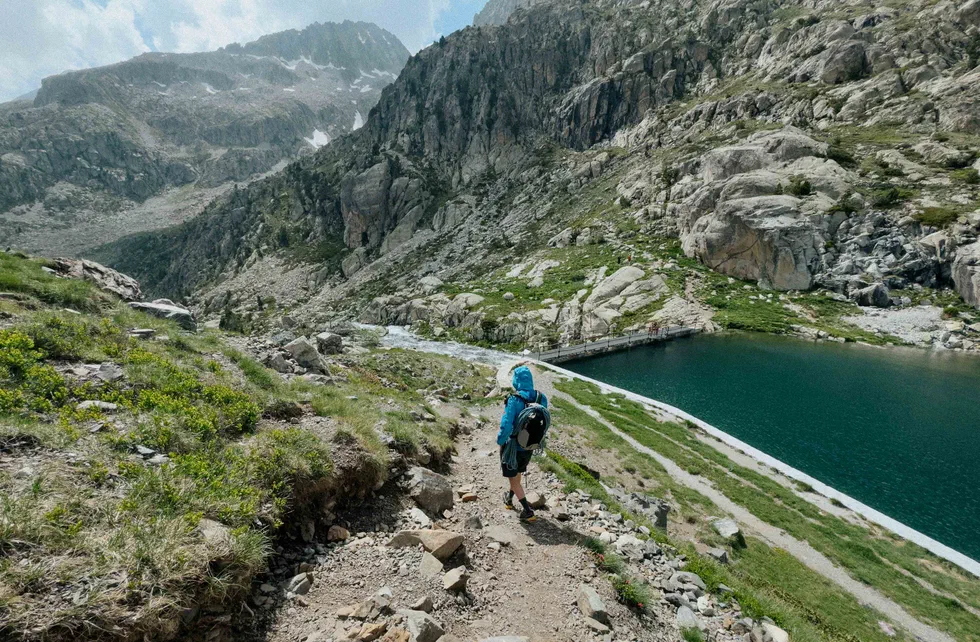
On the descent trail
In summary
- Place: Panticosa, Spain
- Route: Espolon del Pino
- Max difficulty: 5b
- Height: 250 m
- Gear: Equipped climb, twin ropes
- Atmosphere: Accessible, beautiful rock, incredible view
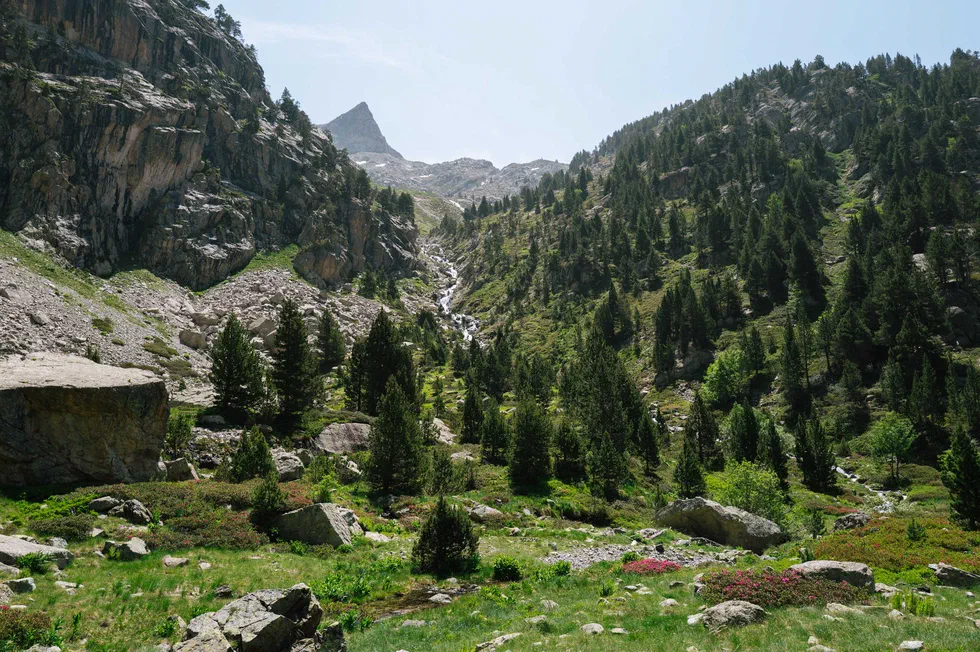
Kisses, I will leave you with a few photographs.
If this article speaks to you, you can see my photo reports, discover Pyrenees photo prints, or contact me about your photo project.