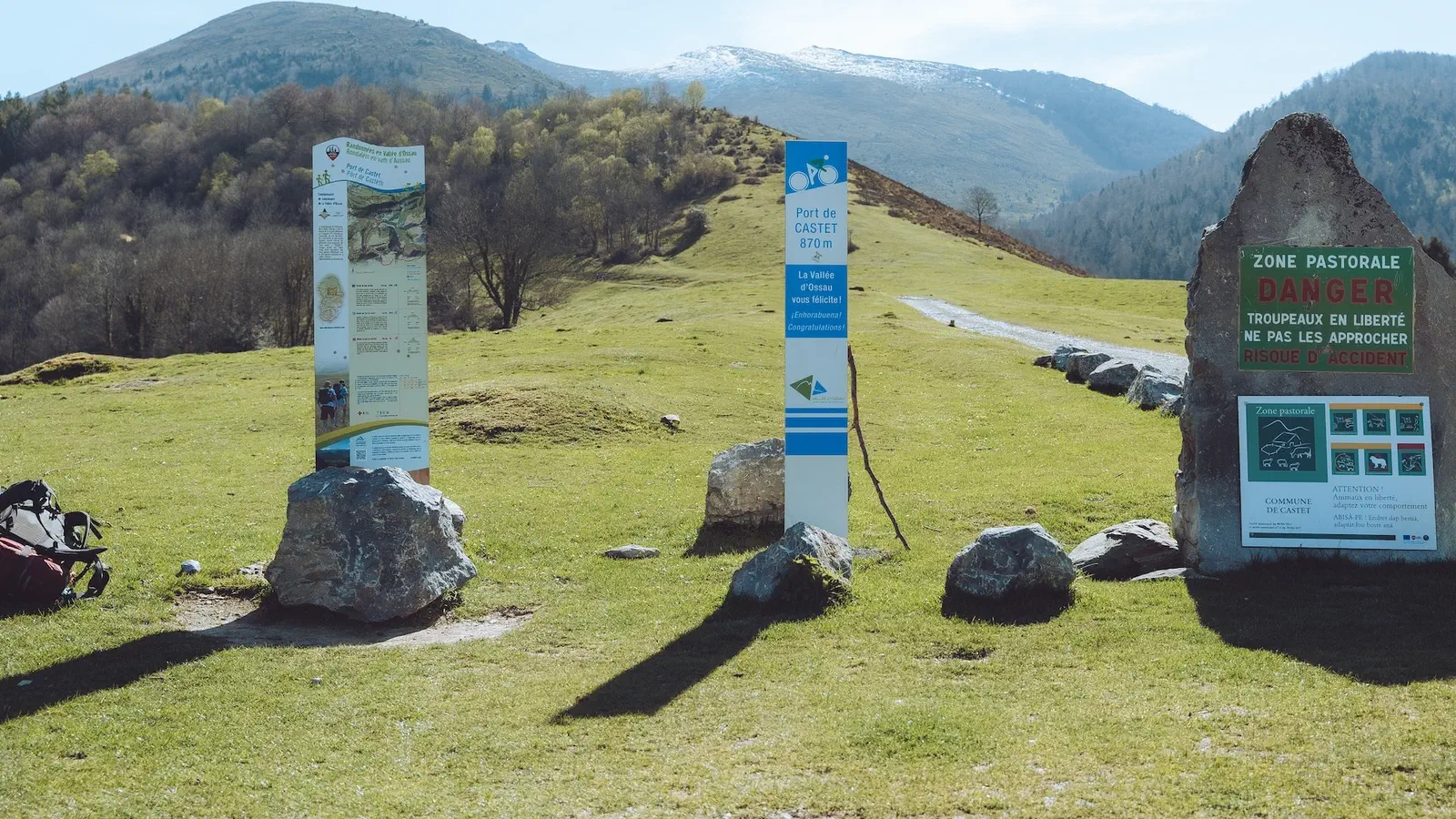
Pyrenees, bivouac and gear test in the Ossau Valley
There we go. If you read my previous article, you know I bought some gear with the idea of going bivouacking in the mountains. It is done! It was a really beautiful mountain outing, a breath of fresh air for me, simple but effective. I also took the opportunity to try out my freshly acquired gear.
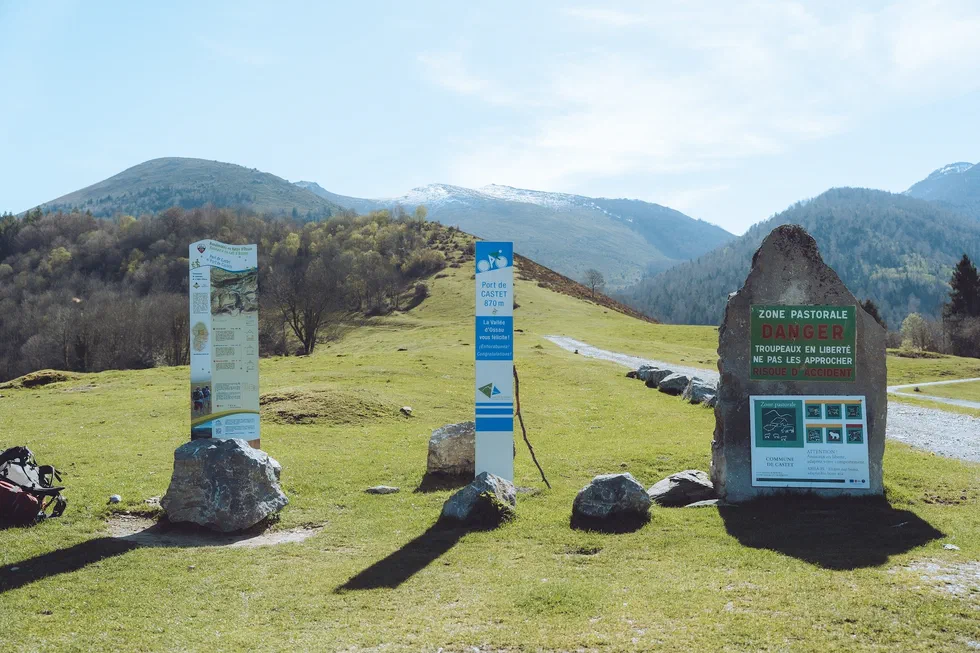
Signs at the start of the hikes from Port de Castet
A difficult but satisfying ascent
Off we went! Four motivated hikers climbing a rather steep slope to reach Le Mail from the Port de Castet. After two kilometers of walking, we began 607 meters of positive elevation over 1.4 km. It works the legs.
What is positive elevation? Positive and negative elevation are two terms commonly used in the mountains to describe the elevation gain and loss of a route or high-altitude outing. Positive elevation represents the total uphill elevation covered during an ascent or mountain hike, meaning the difference between the starting altitude and the highest altitude reached. Negative elevation, meanwhile, corresponds to the total downhill elevation encountered during the descent, meaning the difference between the highest altitude reached and the arrival altitude.
Lunch with an unbeatable view over the Pyrenees
We reached 1,621 meters of altitude to enjoy our meal. No gear test yet, because we had bought food from a bakery that same day to make lunch easier. Still, one of us ended up making us a good coffee. Out came the gas bottle, the stove, a windscreen and a beautiful Italian coffee maker.
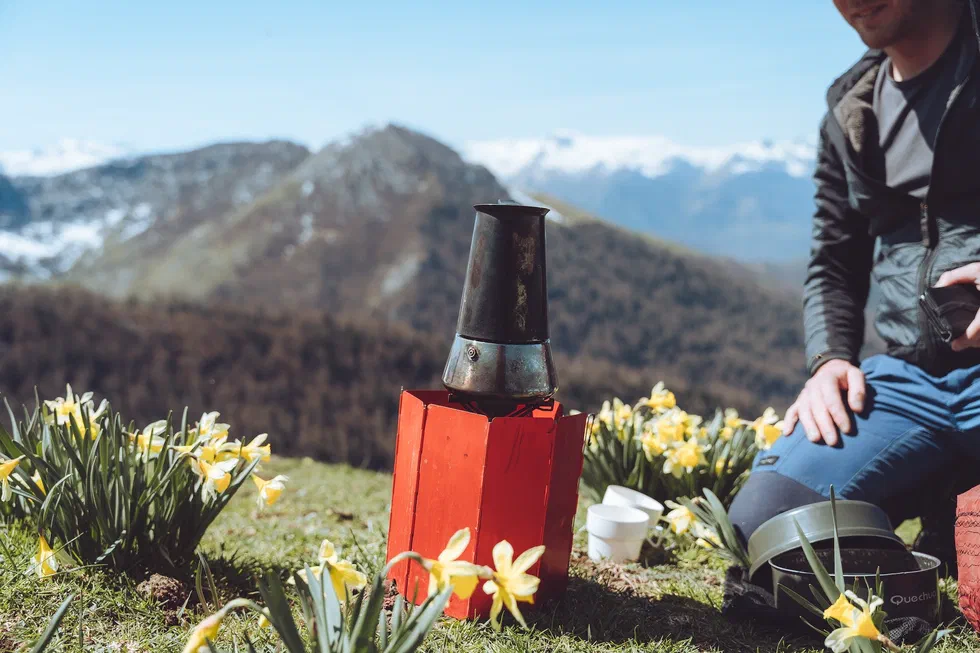
Preparing coffee
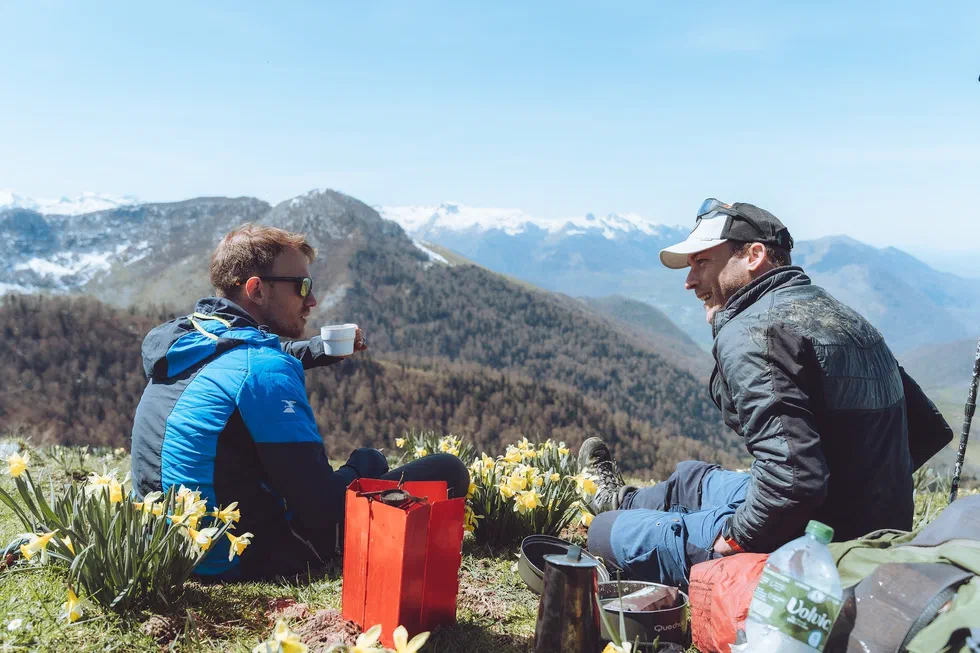
We took the opportunity for a nap after that rather steep climb.
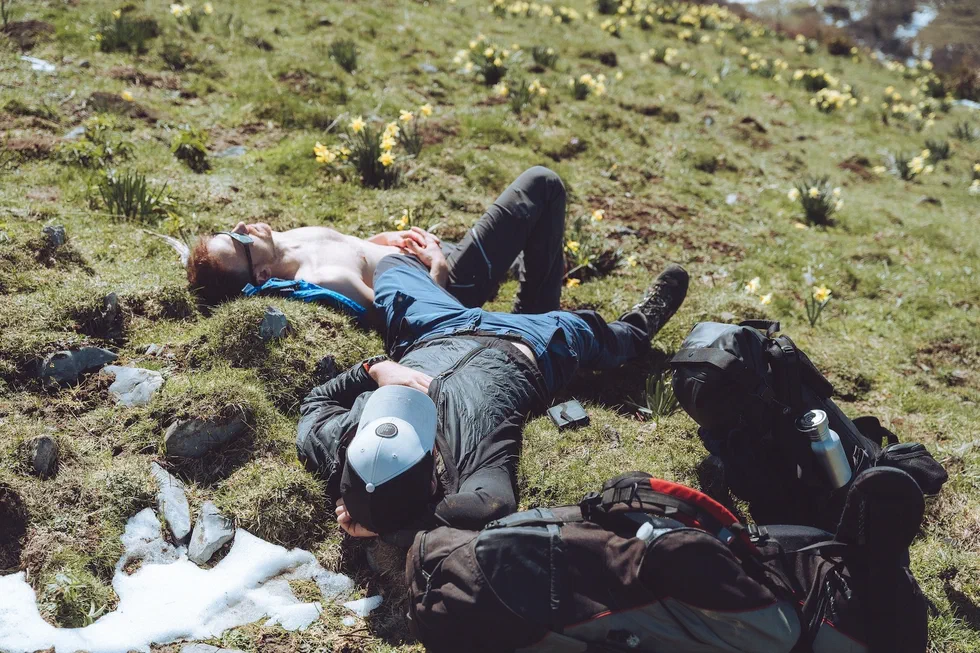
A nap is better in full sun
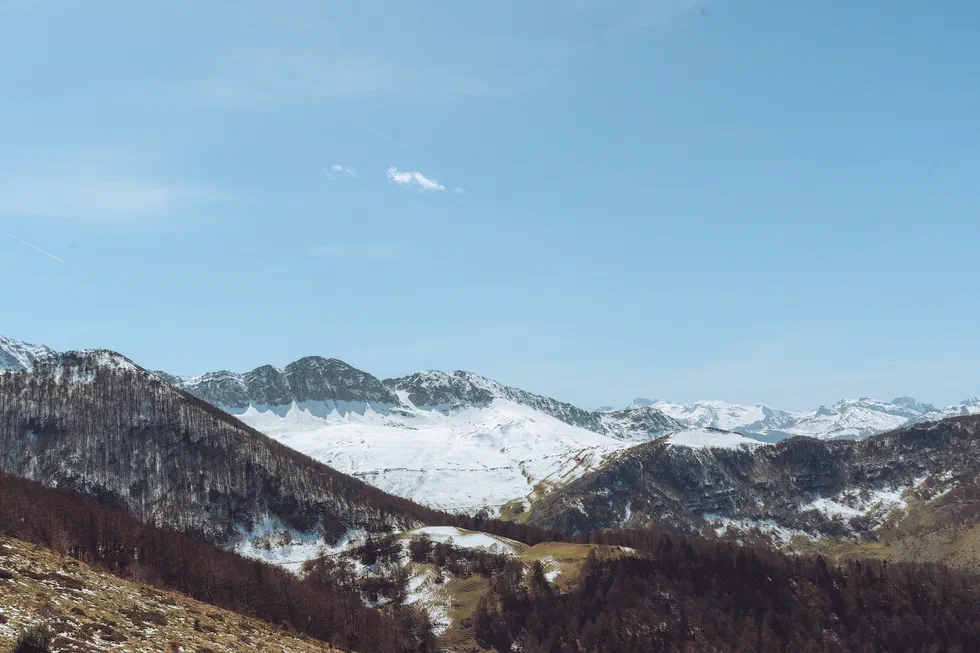
The view during our meal
Then we set off again to reach the ridge of Le Mail and its humble summit. A magnificent view opened over the towns below: Pau, Tarbes, and more. Once at the summit, we took time for a photo moment, breathed a little and drank water… which, by the way, was starting to run low. Next mission: find water!
Searching for drinkable water sources in the Ossau Valley
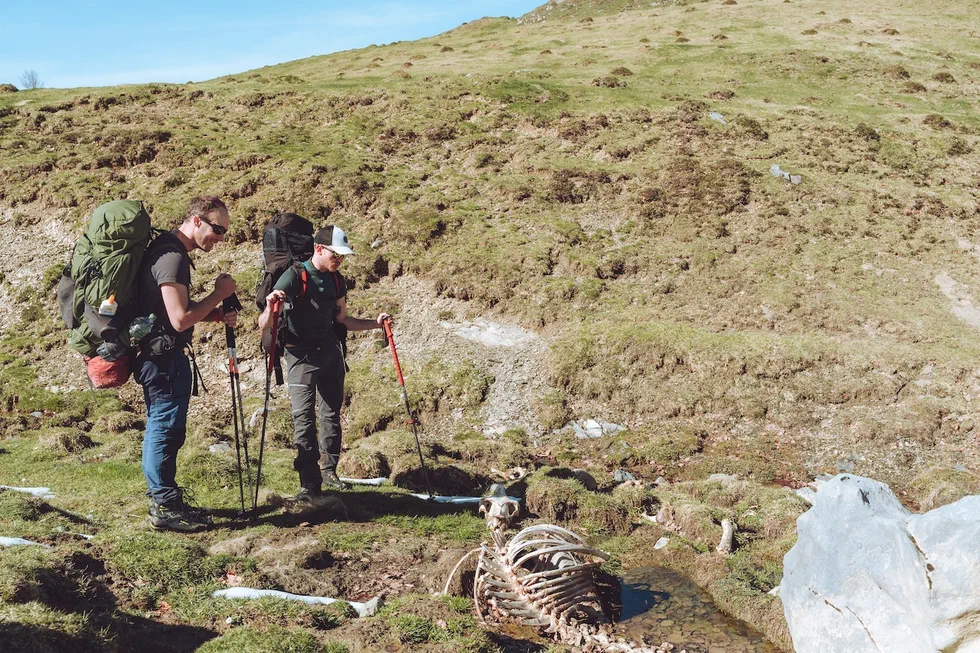
We descended Le Mail quietly, looking for a stream, which we found fairly easily. Since we had a filter bottle, we used it to fill all our bottles and flasks, even though it took quite a bit of time and energy to press continuously and add pressure to the filter. That moment convinced me to add a filter bottle to the list of small things to buy for future outings. With the water topped up, we decided to start walking again in search of a place to bivouac. On the way, we made an unexpected find: the almost complete skeleton of what seemed to be a horse, perfectly cleaned by the vultures of the Pyrenees. The reminder of nature’s laws was very present.
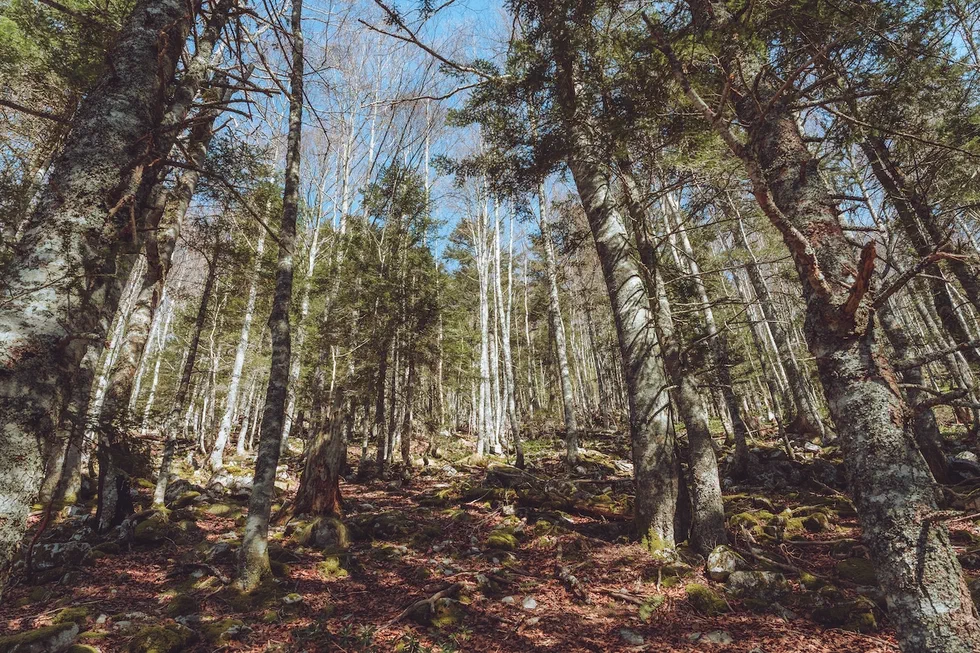
Crossing a mountain forest to find the perfect bivouac spot
After spotting a first rather nice place on a plain, we decided to keep walking, since it was only 4 p.m. So we crossed a forest to reach another plain on the other side. I discovered that mountain forests are not exactly easy. It slips, there are dead leaves everywhere, lots of broken branches on the ground and unstable stones. It teaches you things.
Setting up camp and lighting the fire
After some effort crossing that forest, and after having the chance to observe two owls and a fox, we arrived at a good spot to set up camp. While one of us immediately started gathering wood to light the fire that would warm us and cook our meal, the others set up here and there. For my part, I pitched the tent, inflated the mattresses and took out the sleeping bag so it could loft and I could be as comfortable as possible when I went to bed. The final setup of our camp would be: two in the tent, one in a hammock and our brave last companion directly on the ground, under the stars. Here are a few photos.
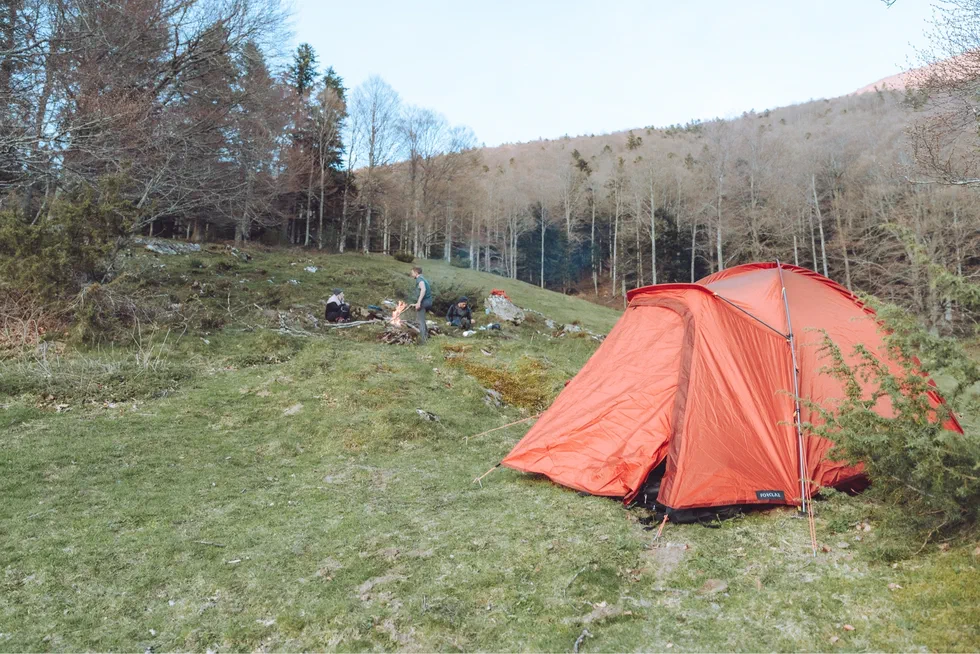
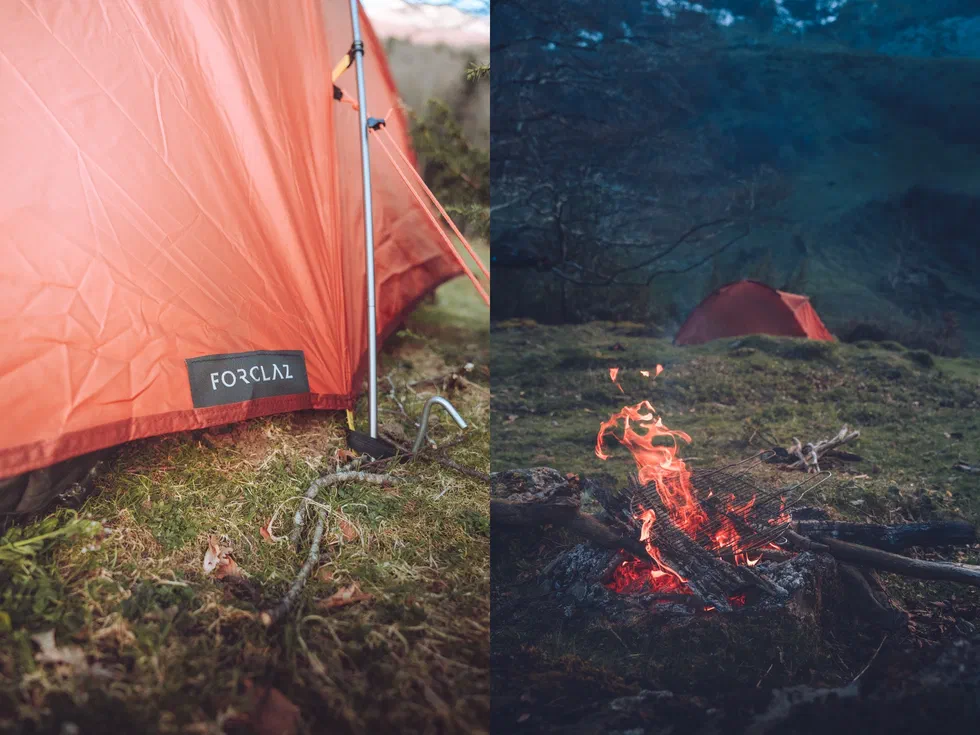
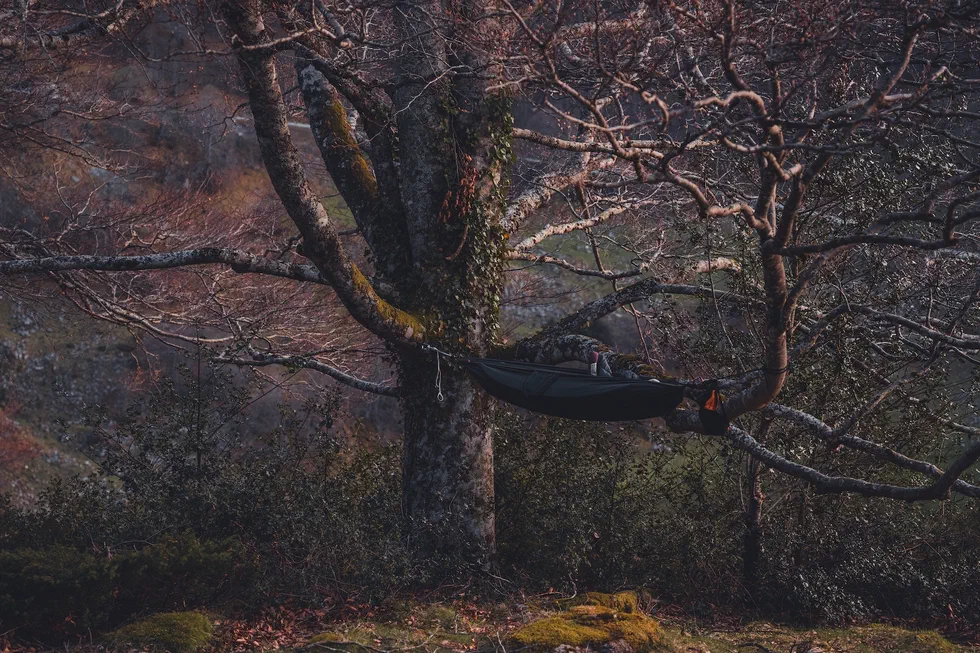
Sharing a meal at nightfall and talking about the stars.
There we were, settled in. The fire had made beautiful embers and our rib steak was ready to cook. At last! Hunger was making itself known after a good day of walking.
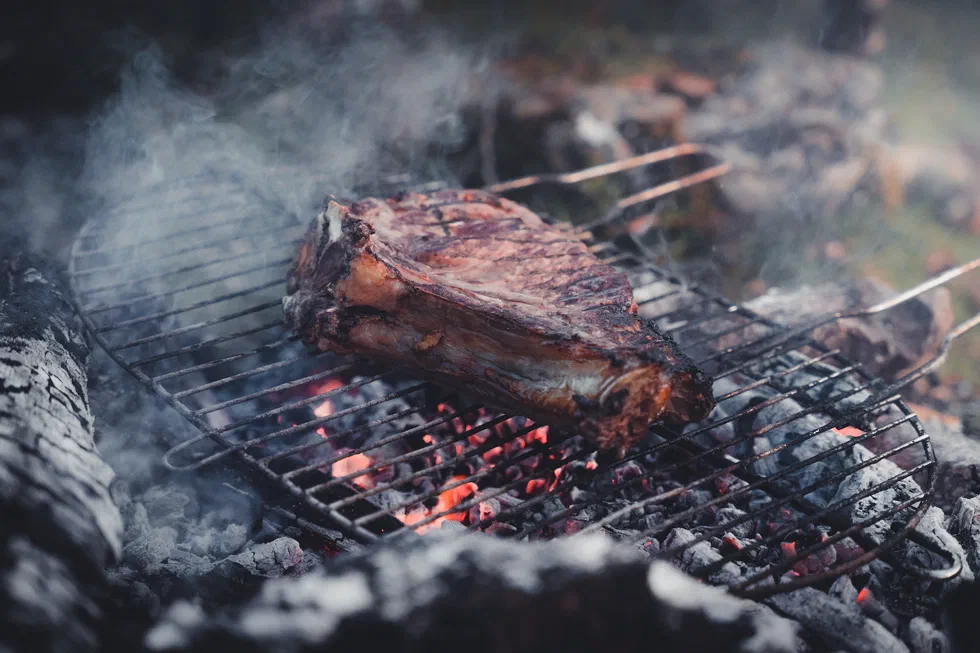
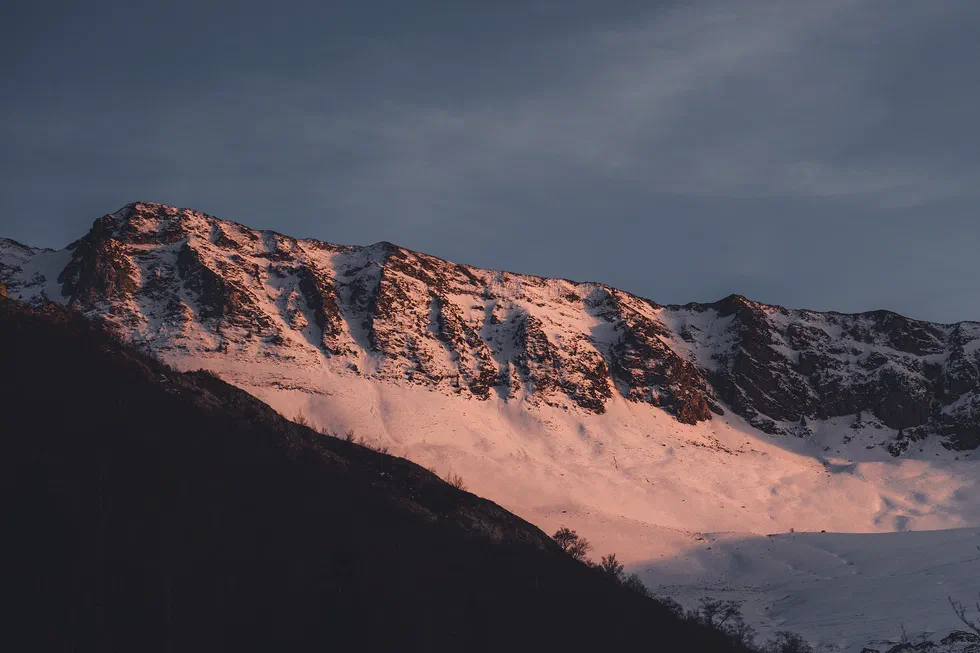
Our view during the meal
Meal
During our meal, someone pointed out how visible the stars were. Indeed, it was my first night in the mountains and the clarity of the celestial vault was incredible. It was almost difficult to spot the constellations, which stand out much more clearly under city light. A conversation followed about stars, planets, space-time and so on… I take this opportunity to thank @EtienneKlein for influencing me to keep an interest in physics and astronomy in my adult life, and also for making me want to discover the mountains, as well as for his book En cherchant Majorana. Le physicien absolu.
Opinion on the gear I bought
Back to the subject. After a pleasant evening, we went to bed. The night passed, but a little difficultly. I had set the tent on a slope, so we slid all night… Apart from that small detail, the Sea to Summit mattresses are very comfortable: I did not feel the ground for a single second. The Makalu sleeping bags are also very pleasant, and to be honest, I was too hot. The outside temperature was 6°C and they are rated to -5°C comfort, so I slept with the bag open and it was perfect.
Return and end of the outing
Morning came. We restarted a small fire to enjoy its warmth during our coffee and cheese breakfast. Once the camp was packed and our bags were ready, we set off for a few kilometers of walking back to the car. End of the adventure! Good memories in mind and a first experience that was short, yes, but pleasant. Gear approved, even if I now have some reservations about the weight of the tent. But I am ready and impatient to go again.
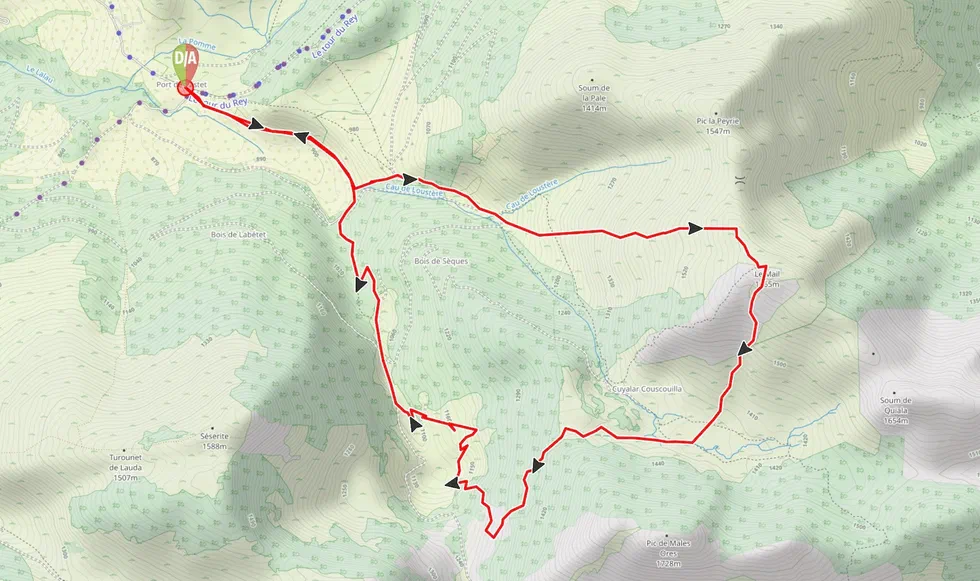
I am sharing the full route with you ;)
So what was in your bag?
One of the places I like hanging out online is Niches, a Discord created by Sylvain. We talk there about our Serious Hobbies. Why am I telling you this? Because on that famous Discord, some people asked me what else I had in my backpack besides my tent, sleeping bag and mattress. So here is a quick list.
I have a Backpack 0.0 by Haize. Strictly speaking, it is not a hiking backpack, but it is a do-everything bag. It does everything well without trying to be excellent at one specific thing, and that is why I love it, but that is another subject. It has a maximum capacity of 28 L, not counting the various attachments and extensions. Here is the list of what I put in it:
A Sony A7III with a 24-70 2.8
A Forclaz MT100 tent
A Simond Makalu I Light sleeping bag
A Sea to Summit mattress
A Forclaz down jacket
A Forclaz rain jacket
An external battery + cable
An Ossau-Iraty ewe’s milk tomme
Snow crampons
Gaiters
A pair of MT500 Forclaz poles
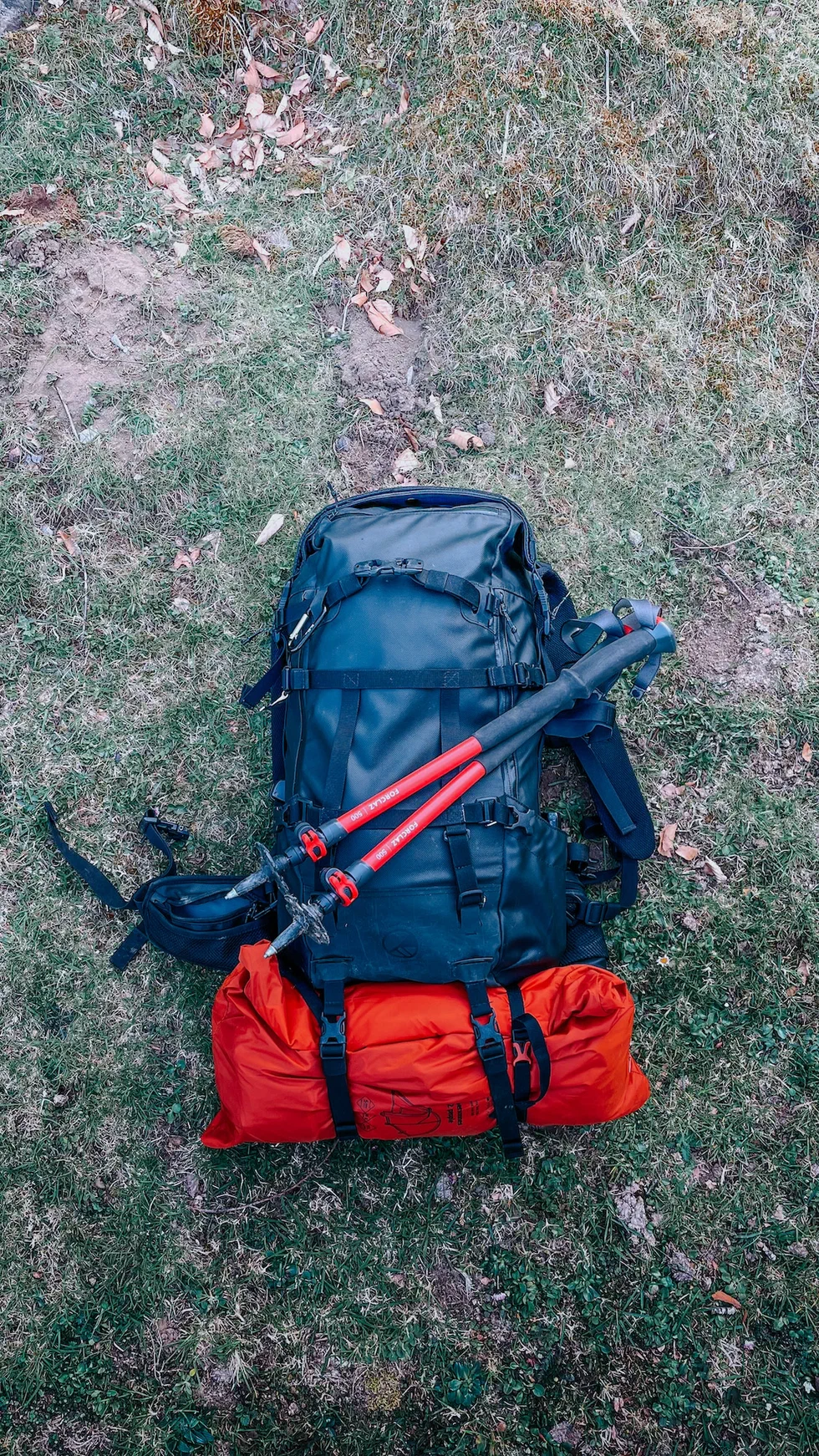
Want to enjoy the same bag? Click the image and add the promo code Odin3000 to your cart
If this article speaks to you, you can see my photo reports, discover Pyrenees photo prints, or contact me about your photo project.